
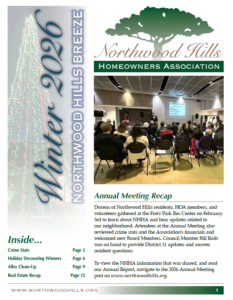
Want to see what’s happening in Northwood Hills? The Northwood Hills Breeze gets published and mailed to residents about four times per year with tons of useful information including details about new regulations or initiatives from the city, helpful tips related to the particular season we’re in, a community calendar, a real estate report, contact information for Board members, a bulk trash collection schedule, and much more! Local businesses advertise in it as well, which helps to underwrite the cost of the publication and showcases service providers who cater to Northwood Hills. Read our most recent newsletter. To find out about some of our recent projects, check out our blog posts below. To learn more about the benefits of membership, visit the Benefits page.
Interested? Membership runs on a calendar year basis, and dues are $400 for the calendar year. If you join now, your membership can start immediately and run through all of 2026. Pay online with Paypal or a credit card, send funds through Zelle to membership @ northwoodhills.org, or mail your check to NHHA, PO Box 800874, Dallas, TX 75380. Thanks for your support!
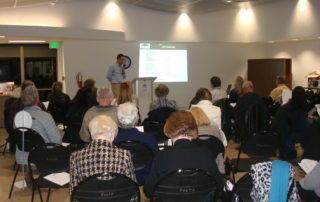
2020 Annual Meeting
The Northwood Hills Homeowners Association Annual Meeting took place on Tuesday, February 11th at Fretz Park Recreation Center (the building next door to Fretz Library). Guests arrived at 6:30 to sign in, enjoy some light refreshments, and mingle with neighbors. The business meeting started at 7pm with a legislative update from Rep. Ana-Maria Ramos, followed by a local update from Dallas City Plan Commissioner Jaynie Schultz. Details were then provided on the Association’s activities including Security, Beautification, Membership, and Special Projects. New Board Members were elected and the 2020 Budget was approved. Questions and comments were welcomed at the conclusion of the business meeting. If you couldn’t make it to the meeting, please feel free to review the annual report for a recap of 2019 and a snapshot of what we hope to achieve in 2020.
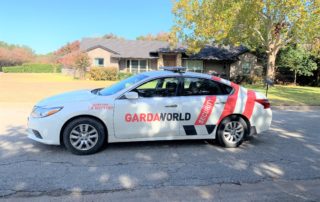
Important Security Patrol Improvements
One of the main benefits provided by Northwood Hills Homeowners Association is the armed security officers who patrol the neighborhood to provide security, improve safety, perform out of town home checks, and deter criminal activity. Our previous provider, United American Security, has now joined GardaWorld Security Services. GardaWorld is the largest privately-owned security services and business solutions company in the world. You may have noticed the new patrol cars over the past month, but that’s not the only change. The NHHA Board approved an increase in weekly patrol hours to give our neighborhood coverage for 2 shifts a day, 7 days a week, for a total of 112 hours (from the previous 88). We now have 3 full-time officers on patrol throughout the week. In addition, officers will carry tablets in their cars, so they have quicker access to email and member contact information.
If you’re a current member, take note of the updated Out of Town Home Check form on the Security page of our website and make sure to use that going forward. The email address for form submission has changed, but the security patrol phone number remains the same. If you have any questions or concerns, don’t hesitate to reach out to your Area representative.
Discount at Local Tree Farms
There’s a popular Chinese proverb that says, “The best time to plant a tree was 20 years ago. The second best time is now.” Northwood Hills’ trees took some big hits this year, which is devastating for many reasons including visual appeal, shade, and property value, just to name a few. NHHA member Amy Schellhorn reached out to WW Tree Farms to secure a 20% discount for those homeowners looking to replace trees that were destroyed. Since fall and winter are a great time to plant trees, and NWH residents can get 20% off, this could be your chance to fill a void left by our recent storms.
Some of the trees recommended are Live Oaks, Bur Oaks, Red Oaks, Cedar Elms, Chinese Pistache, Bald Cypress and Maples. To learn more about types, sizes, and pricing, visit the Tree Farm at 11641 Newberry, Dallas, TX 75229 or call William Young at (214) 226-2076. They have many more trees available than the ones in stock and can work with you to find the right tree for your property. All of WW Tree Farm prices include delivery, planting, and a one year warranty. Possible additional costs include a daily rental fee of $750 for a Skytrac and $250 for materials for plants 8″ and larger in caliper. If you order multiple trees for your property or combine your order with your neighbor, the Skytrac cost can be shared.
Tree Farm hours are 9am to 5pm, Monday through Saturday. You can coordinate with interested neighbors for shared deliveries or reach out to Amy at schell@sbcglobal.net to find out about a potential bulk delivery date in January or February.
A District 13 constituent, Brant Landry, coordinated with Texas Tree Farms for a 33% discount off retail on trees, bushes, flowers, greenery, mulch, granite, and pea gravel. Since Texas Tree Farms is located farther away from our neighborhood (3150 South Highway 287, Waxahachie, TX 75165), Brant is hosting a Q&A at his office building at 12404 Park Central Drive on Wednesday, December 4, 2019 at 6:30pm. This will be your opportunity to ask questions about what to plant and what different species are available. In addition, orders can be placed in person with Texas Tree Farms after the meeting. If you are ready to purchase now, you can email texastreefarms@gmail.com to begin the process. Make sure to reference Landry Buying Group to secure the discount.
Fannin Tree Farm is offering special pricing for storm victims. They have hundreds of beautiful trees ranging in size from 45 gallon to field-grown 12″ caliper and larger specimens in stock. For more information and pricing, contact Bonnie Reynolds or Margie Webb and reference REPLANT TOGETHER. Bonnie can be reached at 469-631-9131 and Margie can be reached at 214-585-7614.
It is recommended to take the next several weeks to prepare your areas for tree planting. If you are going to plant where an existing tree was located then the stump needs to be ground at least 24 inches below the surface. You also might need to have root removal done. You might want to have your arborist/landscape company come out and prepare the areas prior to ordering.
As always, do your due diligence before making a purchase or hiring any contractor. NHHA does not endorse or evaluate any product, service, or company referenced herein.
Our thanks to Amy Schellhorn and Brant Landry for their efforts in securing discounts for our residents.